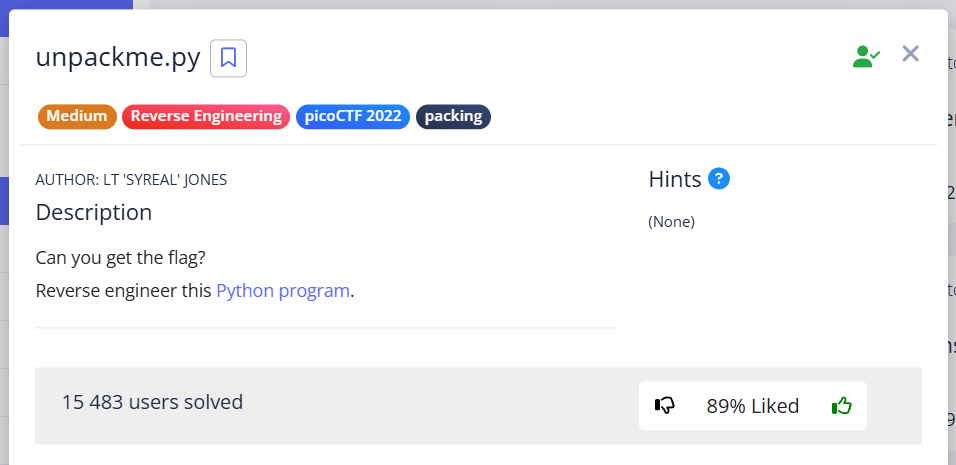
Let’s analyze the code of the downloaded program:
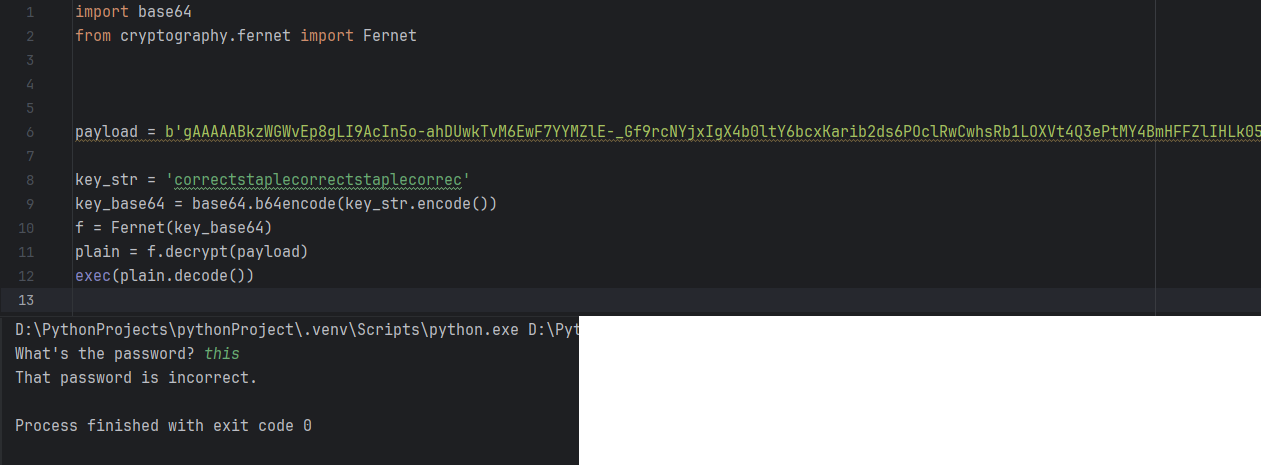
I decided to rewrite this program with a step-by-step output of everything that happens here
goofy_stuff.py
NOTE
This script as well as others I left here: click
import base64
from cryptography.fernet import Fernet
#global
payload = b'gAAAAABkzWGWvEp8gLI9AcIn5o-ahDUwkTvM6EwF7YYMZlE-_Gf9rcNYjxIgX4b0ltY6bcxKarib2ds6POclRwCwhsRb1LOXVt4Q3ePtMY4BmHFFZlIHLk05CjwigT7hiI9p3sH9e7Cpk1uO90xbHbuy-mfi3nkmn411aBgwxyWpJvykpkuBIG_nty6zbox3UhbB85TOis0TgM0zG4ht0-GUW4wTq2_5-wkw3kV1ZAisLJHzF-Z9oLMmwFZU0UCAcHaBTGDF5BnVLmUeCGTgzVLSNn6BmB61Yg=='

key_str = 'correctstaplecorrectstaplecorrec'

key_str_encoded = key_str.encode()
print(f'key_str_encoded: {key_str_encoded}')

key_base64 = base64.b64encode(key_str_encoded)
print(f'key_base64: {key_base64}')

f = Fernet(key_base64)
print(f'f: {f}')

plain = f.decrypt(payload)
print(f"plain (Fernet Decrypted payload): {plain}")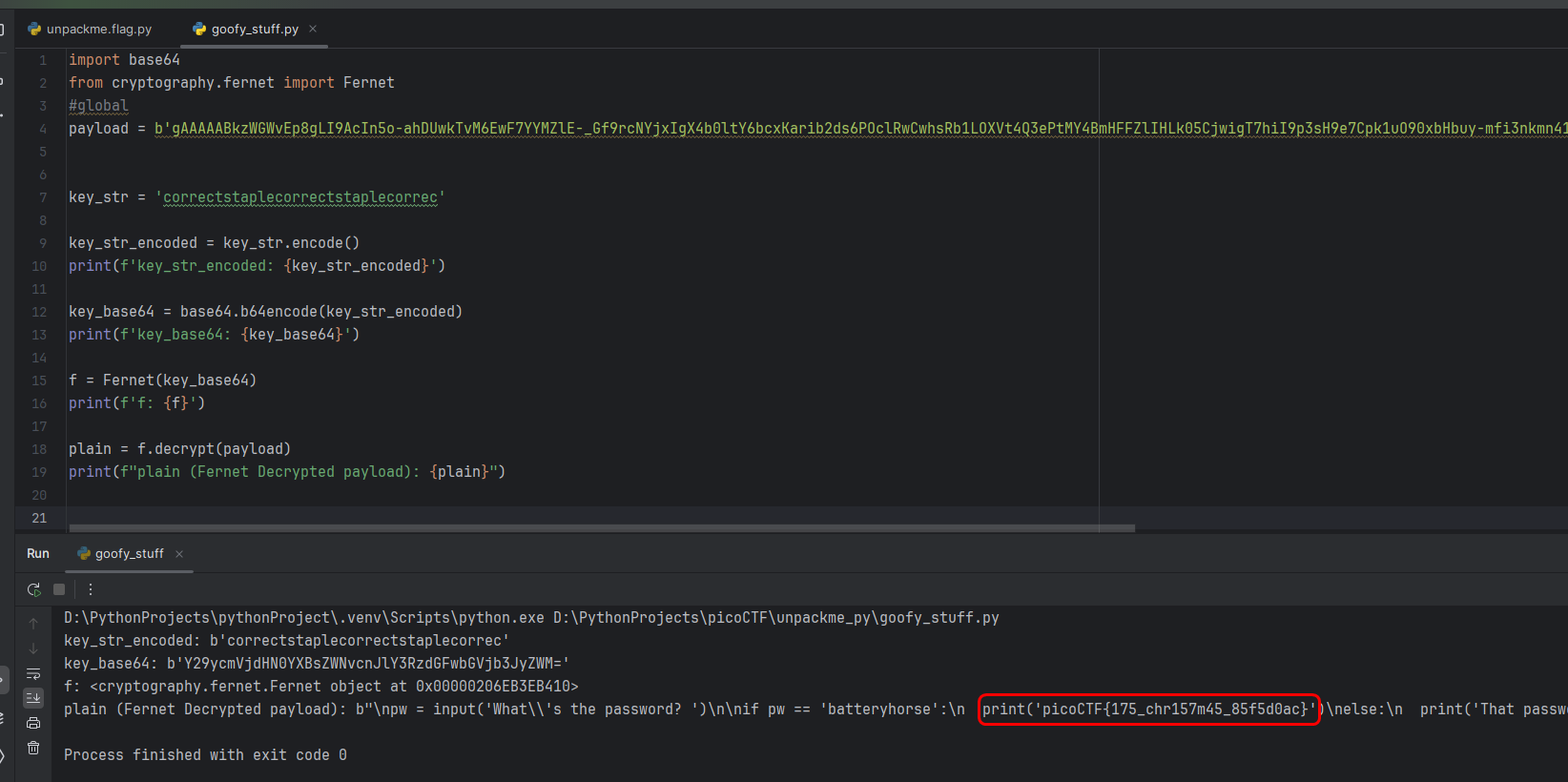
The output of the last print looks as if the program code was encrypted using the Fernet algorithm, and it was necessary to figure out how the key is formed (this algorithm is symmetric).
As can be seen from the program, this payload is program code encrypted with the Fernet algorithm using a key that was previously string encoded + b64encoded.
I check my guess in CyberChef.
The key I got: Y29ycmVjdHN0YXBsZWNvcnJlY3RzdGFwbGVjb3JyZWM=
Payload is ciphertext
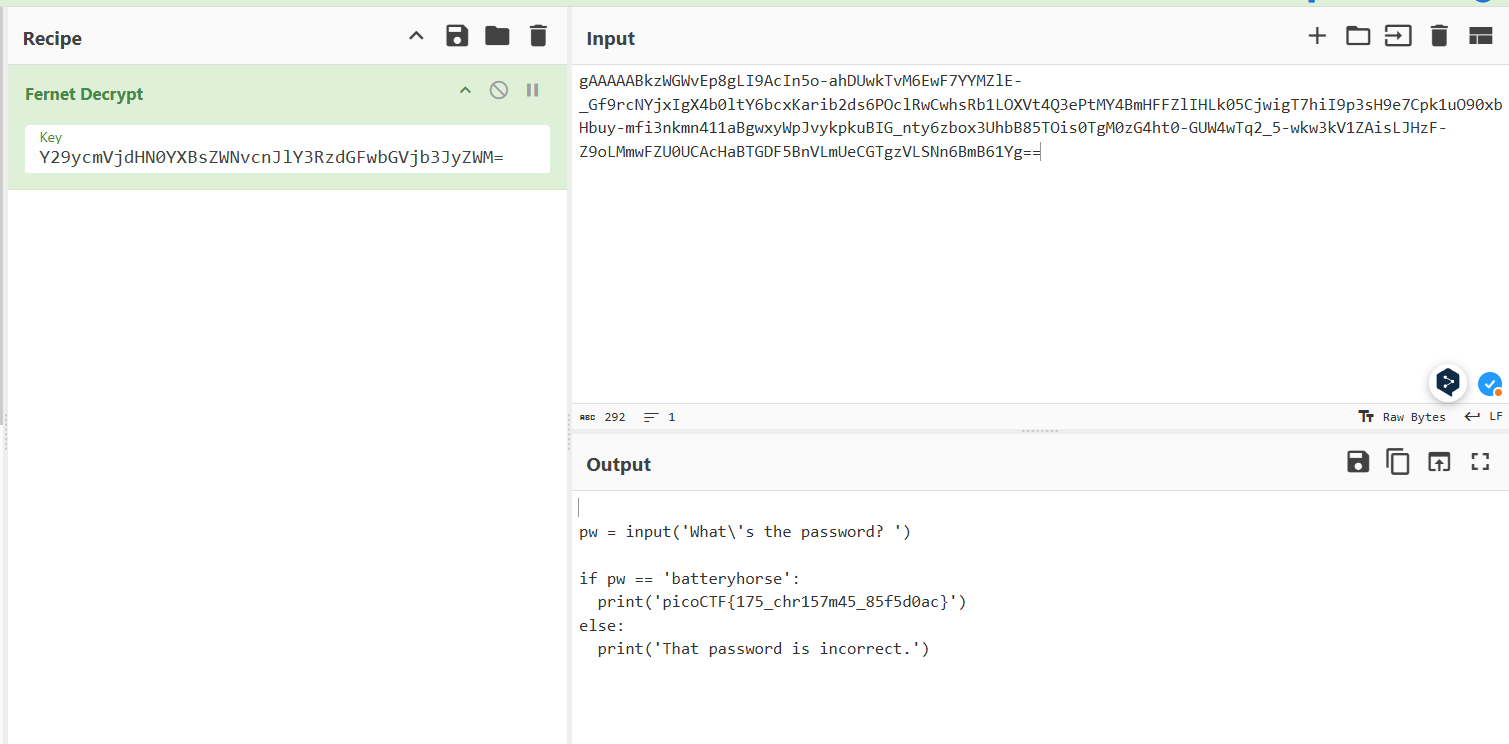
picoCTF{175_chr157m45_85f5d0ac}